
The physics of the peg: Building without glue or screws
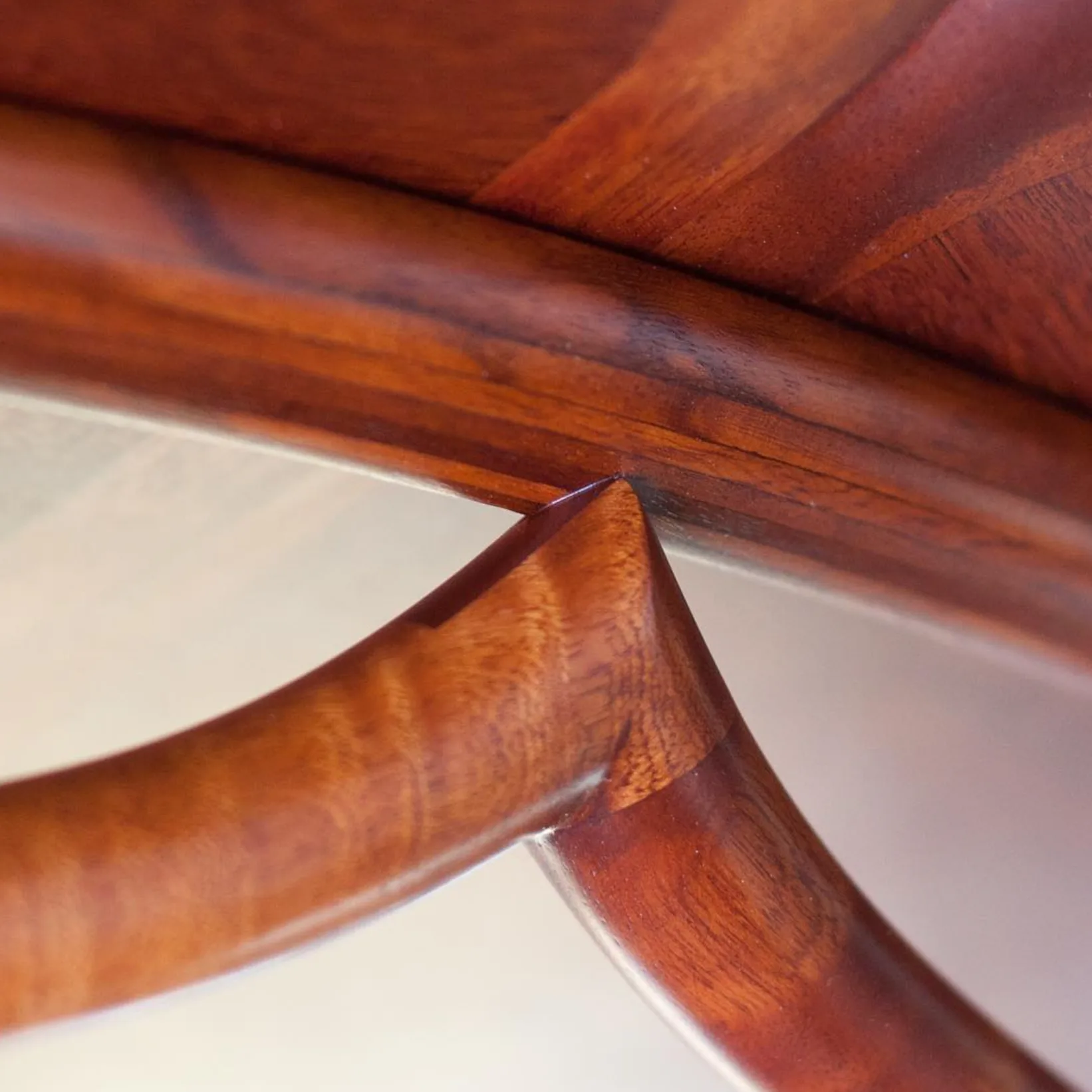
If you walk into our workshop during one of our courses, you'll hear something unexpected: very few power tools, zero cordless drivers, and no spray glue. Instead, you'll hear the crisp snick of a sharp chisel peeling timber, the hum of a hand saw, and the firm tap of a wooden mallet driving a peg home.
The problem with modern fasteners
Modern furniture relies heavily on metal screws and chemical adhesives. The problem? Wood is a living material — it expands and contracts with Byron Shire's humidity changes.
Over time, steel screws pull against moving timber, causing screw holes to strip and loosen. Glues eventually dry out, turn brittle, and fail.
How drawbore joinery works
In our all-timber joinery masterclass we teach an ancient technique called drawboring, seen in classic timber framing and Japanese joinery:
- 01The interlocking joint. we hand-cut a tight mortise-and-tenon joint where two pieces of hardwood interlock like puzzle pieces.
- 02The offset hole. we drill a hole through the joint, but offset the hole in the inner piece by less than a millimetre.
- 03The wooden peg (trunnel). when you drive a hand-tapered wooden peg through the misaligned holes, the peg acts as a lever, forcing the joint together with hundreds of kilos of mechanical force.
No screws. No glue. Just pure timber geometry locked in tension.